



What details should be paid attention to when customizing a series of light bottle decal bottles?
Release Time:
2025-07-11
When customizing a series of plain bottle decals, multiple aspects are involved, such as design, material, craftsmanship, and practicality. Neglecting any detail may affect the final effect or user experience.
When customizing light bottle decal series bottles, it involves multiple aspects such as design, material, craftsmanship, and practicality. Neglecting any detail may affect the final effect or user experience. The following breaks down the core details that need attention from key aspects:
I. Basic Details of the Bottle Itself
1. Material Compatibility
Different materials (glass, ceramic, PET plastic, etc.) have vastly different compatibility with decal processes:
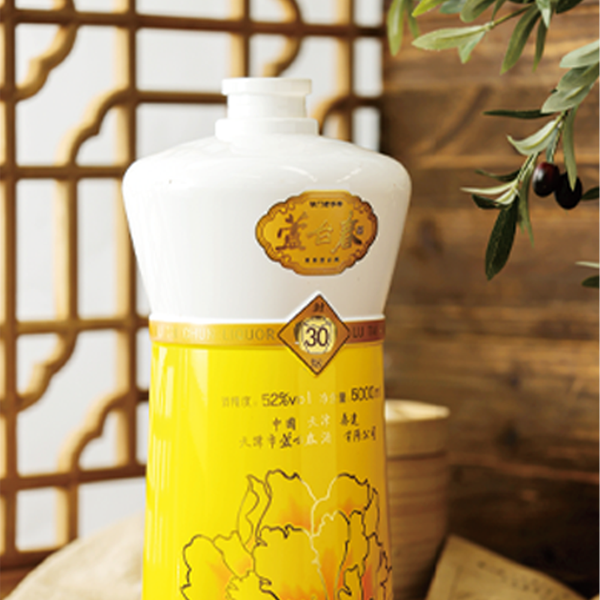
Glass / Ceramic: Suitable for high-temperature decals (where the decal paper fuses with the glaze, making it wash-resistant and scratch-resistant). It is necessary to confirm whether the bottle can withstand the firing temperature (such as ordinary glass may break due to sudden heat).
Plastic (PET/PE): Can only use low-temperature decals (such as self-adhesive, water transfer printing). It is necessary to pay attention to whether the decal adhesive layer is temperature-resistant (to avoid falling off when heated) and whether it meets food contact standards (such as beverage bottles).
Surface Flatness: If the bottle has curvature, embossed texture, or a frosted texture, it is necessary to test in advance whether the decal can fit tightly (to avoid air bubbles, warping). Special-shaped bottles may require custom-shaped decal paper.
2. Specifications and Tolerances
Specify the precise dimensions of the bottle (height, diameter, decal area size), and provide physical objects or 3D models to the manufacturer to avoid decal position deviations due to dimensional errors (such as the label edge exceeding the bottle body).
Mass-produced bottles may have slight tolerances (±0.5mm). Reserve 1-2mm of error tolerance when designing decals, which is especially critical for symmetrical patterns (such as left and right LOGOs).
II. Core Details of Decal Design
1. Pattern and Size Adaptation
Pattern Resolution: Provide high-definition source files (AI, CDR vector graphics are best, raster images need to be ≥300dpi) to avoid blurring after zooming in (especially text and thin line patterns).
Fit Bottle Shape: The pattern of the curved bottle body needs to be "distortion corrected" (such as designing the pattern to be wide in the middle and narrow on both sides, which is more visually coordinated after fitting), and proofing can be done first to test the decal effect.
Color Reproduction:
Specify color values (such as Pantone color codes), but note that high-temperature decals can cause some colors to change (such as red becoming darker and yellow becoming lighter). Plastic decals may have color differences due to the light transmittance of the material. Be sure to confirm with a sample first.
Light-colored patterns (such as white text) on dark-colored bottles (such as dark green glass) need to have a thicker ink layer to avoid being shown through by the background color.
2. Information Compliance
If used for food, cosmetics, etc., the decal needs to include mandatory information (such as ingredient list, shelf life, production address, barcode), and the font size needs to comply with regulations (such as China requires the text height of food labels to be ≥1.8mm).
Trademark and patent patterns need to ensure clear copyright to avoid infringement risks.
III. Decal Process and Material Details
1. Decal Type Selection
Select the decal process according to the purpose. The core differences are as follows:
Special Requirements: If you need waterproof and abrasion resistance (such as repeated wiping of wine bottles), give priority to high-temperature sintering or decals with thickened coating.
2. Decal Paper Material Details
Decal paper for glass / ceramics: It must contain high-temperature resistant glaze components to avoid pattern falling off or lead and cadmium exceeding the standard after firing (food contact must comply with GB 4806.4 standard).
Decal paper for plastics: The adhesive layer needs to be compatible with the plastic material (such as PET special glue for PET bottles to avoid corrosion of the bottle body), and the weather resistance needs to be tested (such as bottles used outdoors need to be resistant to UV aging).
IV. Production and Practicality Details
1. Decal Position and Symmetry
Specify the positioning requirements of the decal: Is it centered, left-aligned, or aligned with the bottle mouth / bottom? Positioning tooling (such as molds, laser marking lines) needs to be used to ensure consistency during mass production, which is especially important for combination sets (such as gift box sets of multiple bottles).
Symmetrical patterns (such as a LOGO on each side of the bottle body) need to strictly control the spacing error (≤1mm) to avoid visual skew.
2. Weather Resistance and Use Scenario Matching
Test extreme environment performance:
High-temperature scenarios (such as hot water bottles, tea sets): The decal needs to be resistant to temperatures above 100℃ without fading or falling off.
Humid / low temperature (such as refrigerated beverage bottles): Check whether the decal falls off due to condensation, and whether the adhesive layer is resistant to low temperatures.
Friction Test: Repeatedly wipe the surface of the decal with a damp cloth to observe whether the ink falls off (especially the text part).
3. Consistency of Mass Production
Proofing Confirmation: Be sure to ask the manufacturer to provide 3-5 samples to check the decal position, color, and fit. After confirming that there is no error, seal the samples as the standard for mass production.
Sampling Standard: Sample inspection is carried out at a ratio of 5%-10% during mass production, focusing on whether there are problems such as air bubbles, warping, pattern offset, and color difference to avoid rework of the entire batch.
V. Cost and Delivery Details
1. Cost Control
Decal Paper Minimum Order Quantity: Small batches (such as less than 1000 pieces) may lead to an increase in unit price due to the high cost of decal paper printing. You can negotiate with the manufacturer whether small batch customization is supported.
Process Complexity: Multi-color gradients, hot stamping / silver, and three-dimensional decals will increase costs. Simplifying the design (such as a single-color LOGO) can reduce costs.
2. Delivery Cycle and Packaging
Allow Sufficient Time: From design confirmation to proofing, mass production, and quality inspection, it usually takes 10-30 days (the high-temperature firing cycle of glass is longer) to avoid quality problems caused by rushing work.
Packaging Protection: The bottles are fragile and require the manufacturer to use shock-absorbing foam and separated cartons for packaging, and mark them as "Fragile Items" to avoid damage during transportation.
Summary
The core of customizing light bottle decal series bottles is "matching" - design matches bottle type, process matches material, and details match usage scenarios. Fully communicate needs in the early stage (such as purpose, budget, and compliance requirements), strictly conduct proofing tests in the mid-stage, and control batch consistency in the later stage to ensure that the final product is both beautiful and practical.
Keywords:
Learn more about industry trends
We are here to help you
Address: Industrial Park, Shiyanqiao Town, Longchang, Neijiang City, Sichuan Province

Copyright © 2025 All rights reserved by Sichuan JIUPINGLIANHUA Glass Products Co., Ltd. Power by 300.cn · Privacy Policy


 Jiuping Lianhua